PUBLIC BETA · FREE DOWNLOAD
Design thesignal chain.Deploy itto silicon.
NODE GRAPH · VIRTUAL SCOPES · CASPER TOOLFLOW · RFSoC
BLOCK TYPES101
EXAMPLE DESIGNS7
HARDWARE NEEDEDNONE TO SIMULATE
EXPORTVIVADO TCL · casperfpga
PLATFORMSWINDOWS · MACOS · LINUX
FREE BETA · PRERELEASE SOFTWARE
Apexia.Fabric
THE WORKFLOW
Design, simulate, deploy.
DESIGN
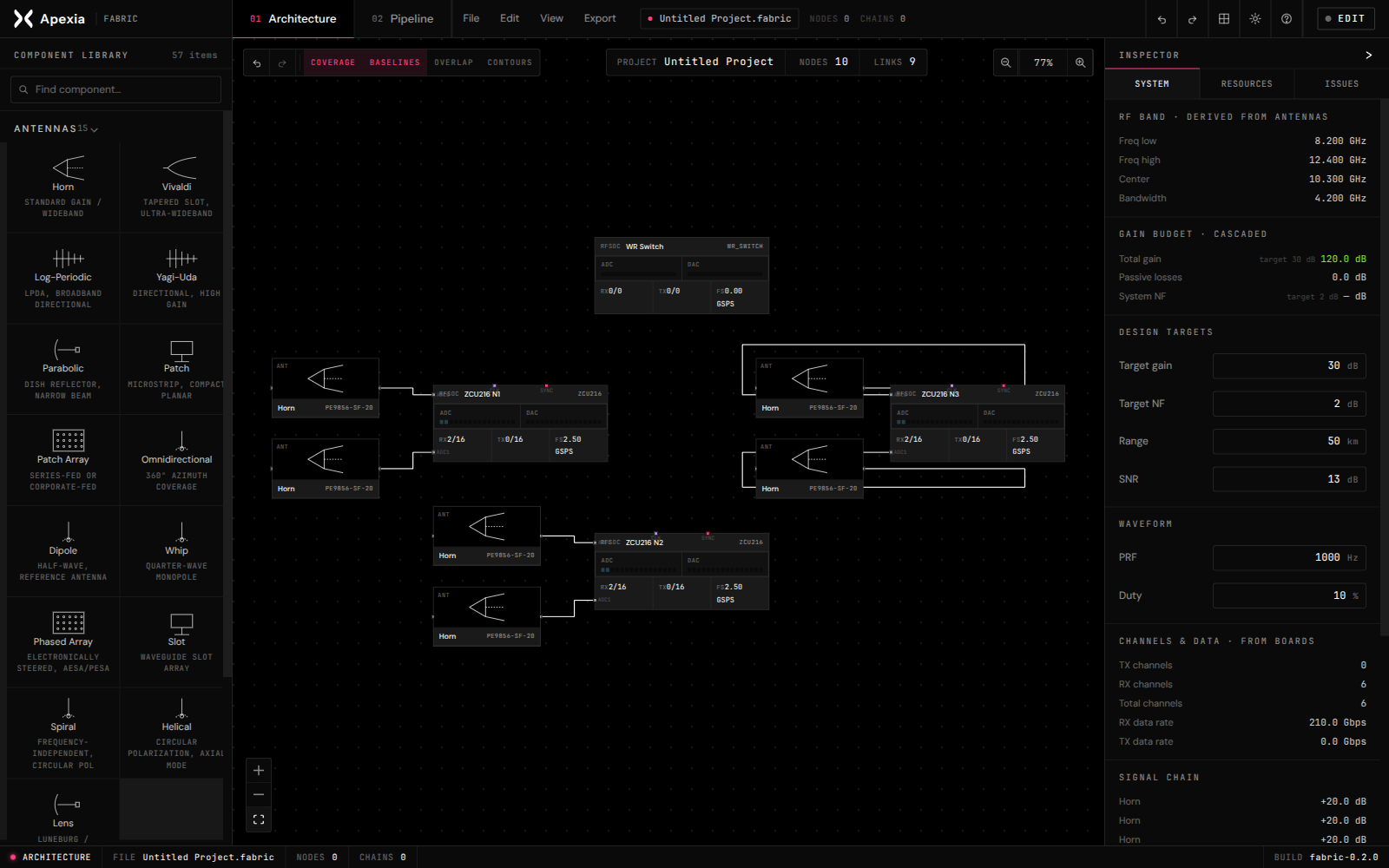
A node-graph editor with 101 block types across RF, DSP, timing, channelization, measurement, and system I/O. Sample rates, data types, and center frequencies propagate live through the graph; type-checked ports catch impossible chains before you build them.
SIMULATE
Probe any edge with virtual scopes: spectrum, time, constellation, waterfall, and beamformer views. The whole app runs in simulation with no hardware attached.
DEPLOY
Export Vivado TCL and casperfpga Python for the CASPER toolflow, connect live to real boards, configure RF data converters at runtime, and walk multi-tile synchronization with the built-in MTS wizard.
DSP LIBRARY
A working DSP vocabulary, built in.
BOARD MODELS
Hardware truth built in.
- 01FIELD GUIDE
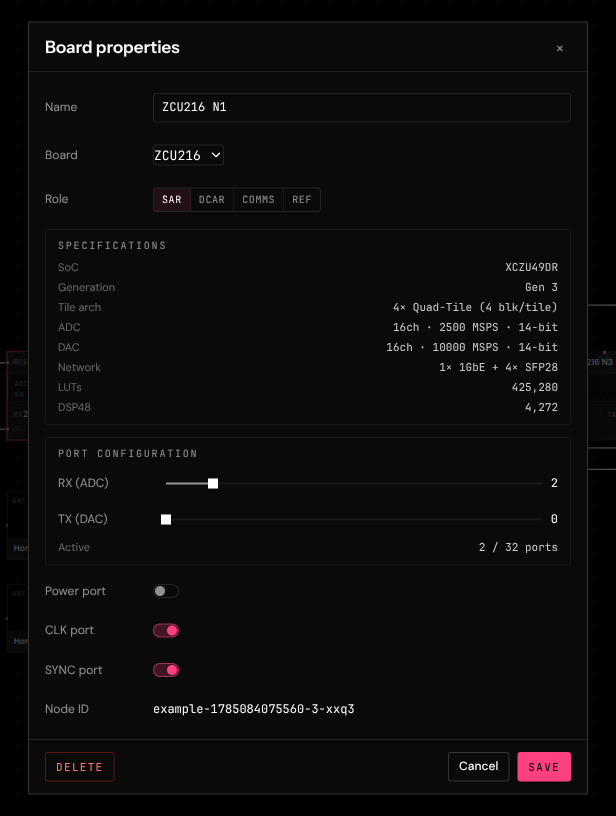
ZCU216
Gen 3 · 16 ADC / 16 DAC
- 02FIELD GUIDE
RFSoC 4x2
Gen 3 · 4 ADC / 2 DAC
- 03
ZCU111
Gen 1 · 8 ADC / 8 DAC
DOWNLOAD
Download the latest Apexia Fabric Beta.
Apexia.Fabric
Windows 10/11
Installer (.exe) · x64
SmartScreen may warn; click More info → Run anyway.
macOS 12+
Disk image (.dmg) · Apple Silicon
First launch: right-click the app → Open → Open.
Linux
AppImage + .deb · x64
chmod +x the AppImage, or sudo apt install ./<file>.deb.
Every release ships a SHA256SUMS file. Check it with the command for your system.
- LINUX
- sha256sum -c SHA256SUMS
- MACOS
- shasum -a 256 -c
- WINDOWS
- CertUtil -hashfile <file> SHA256
Hardware: simulation works out of the box with nothing attached. Live capture with an ADALM-Pluto needs libiio. An attached BladeRF is detected automatically, and code generation works today for BladeRF, ADALM-Pluto, and LimeSDR.
SHIPS WITH EVERY APEXSDR
The softwarelayer ofApexSDR.
PALM BAY, FLORIDA · 28.0345° N 80.5887° W
CLARITY BEYOND THE NOISE